

Introduction: The “Backbone” of Modern Texture Science
In the complex landscape of hydrocolloid thickeners, few ingredients rival the versatility of Xanthan Gum (E415). As a high-molecular-weight polysaccharide produced through the aerobic fermentation of sugars by Xanthomonas campestris, it serves as the primary rheology modifier for industries ranging from gluten-free bakery to deep-sea oil drilling.
For procurement managers and R&D formulation engineers, sourcing this ingredient requires looking beyond the basic CAS number (11138-66-2). It involves a critical analysis of particle size distribution, hydration rates, and pseudoplastic behavior.
This guide provides a comprehensive technical breakdown of Xanthan Gum specifications, specifically focusing on the trade-offs between 80 Mesh and 200 Mesh powders, to help you make data-driven sourcing decisions.
The Science of Viscosity: Understanding Pseudoplasticity
Before debating mesh sizes, it is crucial to understand why Xanthan Gum is the preferred stabilizer and suspending agent over cheaper alternatives like Guar Gum or CMC.
The Shear-Thinning Effect
Xanthan Gum exhibits extreme pseudoplasticity (shear-thinning behavior).
- At Rest (High Viscosity): It creates a weak gel network with a high yield value. This effectively suspends particles (like herbs in dressing or cuttings in drilling mud) preventing sedimentation.
- Under Shear (Low Viscosity): When shaken, poured, or pumped, the viscosity drops instantly. This allows ketchup to flow from a bottle or drilling mud to be pumped efficiently.
- Recovery: Once the shear force stops, the viscosity recovers almost immediately.
Formulation Insight: This unique property makes it an ideal mouthfeel enhancer. It provides thickness without the “gummy” or “slimy” sensation associated with other starches.
Technical Specifications Analysis: 80 Mesh vs. 200 Mesh
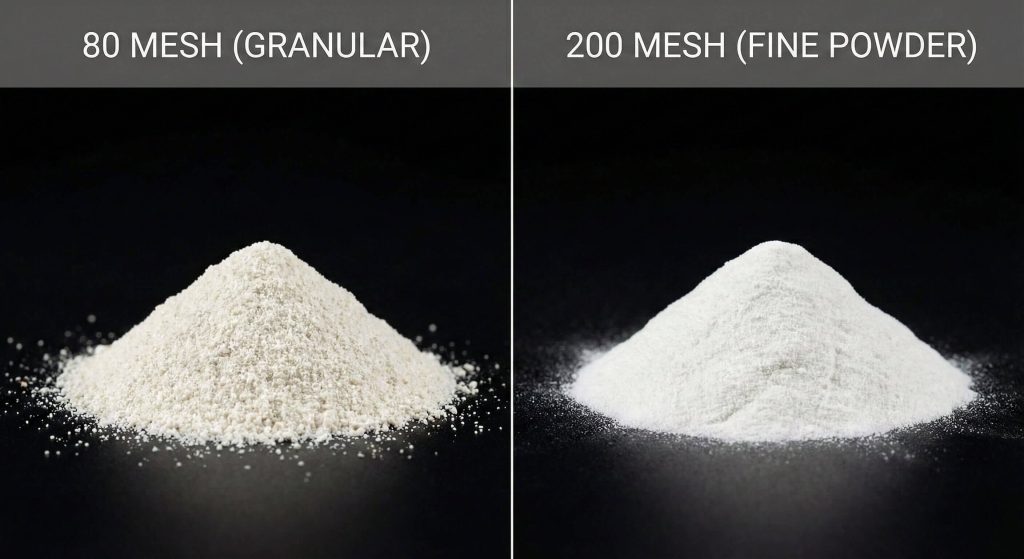
One of the most common technical queries in bulk sourcing is selecting the correct particle size. While the chemical composition remains identical, the physical behavior during the dispersion and hydration phases differs significantly.
A. Standard 80 Mesh (The Versatile Workhorse)
This is the industry standard for general food and industrial applications.
- Physical Form: Granular powder (similar to fine sugar).
- Dispersion Performance: The larger particle size reduces the surface area initially exposed to water. This prevents the formation of “fish-eyes” (lumps where dry powder is trapped inside a gel coating).
- Ideal Processing: Suitable for standard agitation tanks where high-shear mixing is not available.
B. Fine Powder 200 Mesh (The Rapid Hydrator)
A specialized grade for precision manufacturing.
- Physical Form: Ultra-fine, dust-like powder (similar to flour).
- Hydration Rate: Due to the massive surface area, it absorbs water and builds viscosity rapidly.
- Risk Factor: High risk of lumping if not added correctly.
- Ideal Processing: Requires high-shear blending equipment or oil-phase dispersion (slurry method) to ensure smooth integration.
Comparative Data Table
| Technical Parameter | Standard Grade (80 Mesh) | Fine Powder Grade (200 Mesh) |
|---|---|---|
| Pass Rate | 100% thru 60 mesh; >95% thru 80 mesh | >95% thru 200 mesh |
| Dispersibility | High (Low risk of lumping) | Low (Requires high shear) |
| Viscosity Build-up | Slower (Gradual thickening) | Instant (Rapid thickening) |
| Dust Level | Low | High (Requires dust control) |
| Typical Application | Sauces, Dressings, Bakery | Dry Blends, Injectables, Instant Beverages |
| Shear Compatibility | Low to Medium Shear | High Shear Required |
Deep Dive: Industrial & Food Applications
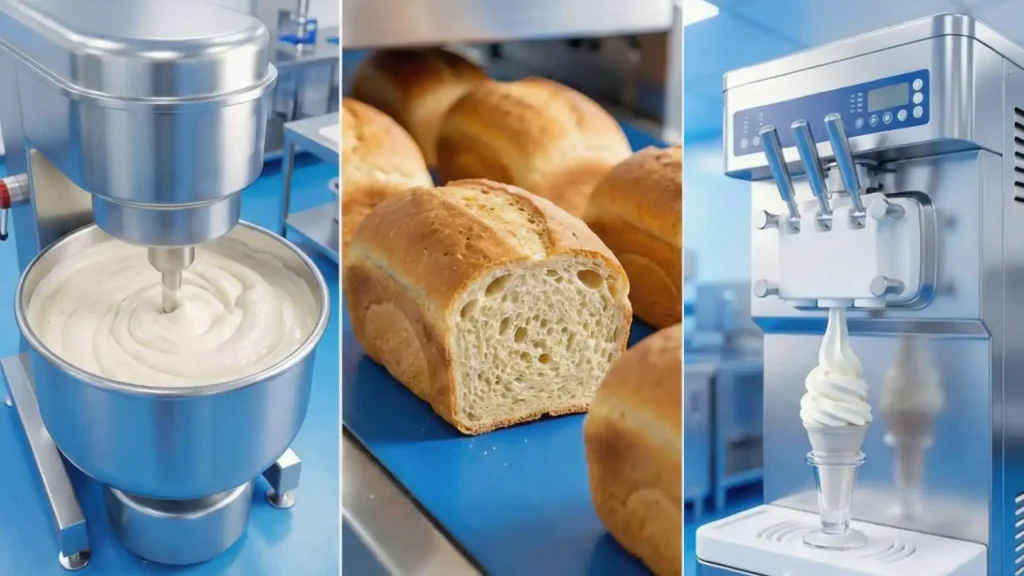
Xanthan Gum serves as a critical functional ingredient across diverse sectors. Understanding its interaction with other ingredients is key to successful formulation.
A. Bakery & Gluten-Free Solutions
In the absence of the gluten protein network, Xanthan Gum acts as the structural architect.
- Water Binding: It dramatically increases water retention, delaying starch retrogradation (staling).
- Gas Retention: It traps air bubbles during rising, ensuring volume and reducing crumbliness in gluten-free breads.
- Synergy: Often paired with Locust Bean Gum (LBG) or Konjac Gum to increase gel strength.
B. Liquid Condiments (Sauces & Dressings)
- Emulsion Stability: It stabilizes oil-in-water emulsions, preventing separation (creaming) for over 12 months.
- Thermal Stability: Unlike starch thickeners which break down under heat, Xanthan Gum remains stable during pasteurization and sterilization processes.
- Acid Resistance: Maintains viscosity in high-acid environments (pH < 3), making it perfect for vinegar-based dressings.
C. Frozen Applications (Ice Cream)
- Cryoprotection: It controls the migration of water molecules during freezing, inhibiting the growth of large ice crystals.
- Mouthfeel: Prevents the “sandy” texture in ice cream caused by temperature fluctuations (freeze-thaw shock) during transport.
D. Oil & Gas Drilling (Industrial Grade)
In the energy sector, Xanthan Gum is a premium additive for Drilling Fluids (Muds).
- Cuttings Transport: Its high low-shear-rate viscosity (LSRV) ensures that drill cuttings are suspended and carried to the surface when circulation stops.
- Friction Reduction: It reduces pressure loss in the drill string.
- Salt Tolerance: Remains effective even in saturated brine or seawater environments.
Troubleshooting Common Formulation Issues
Even with premium ingredients, formulation defects can occur. Use this guide to diagnose process failures.
| Problem | Probable Cause | Recommended Solution |
|---|---|---|
| “Fish-Eyes” (Clumping) | Powder added too fast or poor agitation. | Switch to 80 Mesh; pre-blend with sugar/salt (1:5 ratio); or disperse in oil first. |
| Low Viscosity | High shear degraded the polymer (rare) or enzymatic attack. | Check for cellulase contamination; ensure mix time is sufficient for full hydration. |
| Grainy Texture | Incomplete hydration. | Increase mixing time; heat the water (if possible); verify particle size. |
| Phase Separation | Insufficient yield value. | Increase dosage slightly (0.05% increments); check compatibility with other gums. |
Strategic Sourcing: Partnering with HylixChem
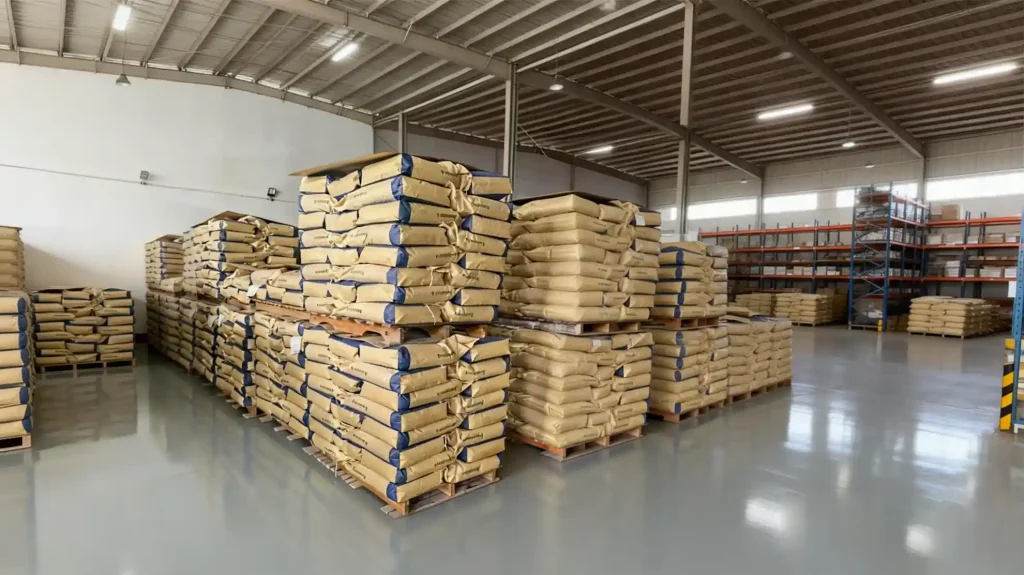
Once the technical specifications are defined, the challenge shifts to supply chain reliability. This is where HylixChem steps in, bridging the gap between raw manufacturing and precision distribution.
Why Quality Control Matters
Inconsistent fermentation batches can lead to viscosity fluctuations (e.g., one batch is 1200cp, the next is 1600cp), wreaking havoc on automated production lines.
At HylixChem, we implement strict lot-to-lot consistency protocols:
- Standardized Viscosity: We guarantee viscosity ranges (1% KCL solution) to match your specific rheology needs.
- Microbiological Purity: Our Food Grade Xanthan Gum undergoes rigorous testing for Salmonella, E. Coli, and heavy metals, meeting FCC and E-Number (E415) standards.
- Certification Portfolio: Fully compliant with ISO 9001, HACCP, KOSHER, and HALAL requirements.
Logistics & Supply Chain
- Flexible MOQ: We support pilot runs with MOQs starting at 1000kg.
- Strategic Stocking: With warehouses optimized for rapid export, we typically ship in-stock mesh sizes within 7 days.
- Packaging: Available in 25kg Kraft bags or cardboard drums, palletized and shrink-wrapped for international freight safety.
Frequently Asked Questions (FAQ)
Q: Can Xanthan Gum be used in “Clean Label” products? A: Yes. It is a fermentation-derived natural biopolymer. However, some brands prefer to list it as “fermented corn sugar thickener” depending on local labeling laws.
Q: What is the synergy between Xanthan and Guar Gum? A: Combining Xanthan with Guar Gum creates a synergistic increase in viscosity—meaning the blend is thicker than the sum of its parts. This is a common strategy to reduce costs, as Guar is typically cheaper. Visit our Guar Gum Product Page to compare specifications.
Q: Is your Industrial Grade suitable for personal care? A: No. While chemical functionality is similar, Personal Care/Cosmetic Grade requires stricter microbiological controls (similar to Food Grade) to prevent skin irritation or spoilage. HylixChem supplies dedicated grades for each sector.
Q: How does pH affect viscosity? A: Xanthan Gum is remarkably stable across a wide pH range (pH 2 to 12). This makes it superior to Sodium Alginate or CMC in acidic sauces or alkaline cleaning products.
Ready to Optimize Your Formulation? Whether you need the rapid hydration of 200 Mesh or the easy dispersion of 80 Mesh, proper sourcing is the first step to product stability.
Contact HylixChem Technical Sales:
- Request a COA/TDS: Click Here to Contact Us
- Explore Our Catalog: View All Products