

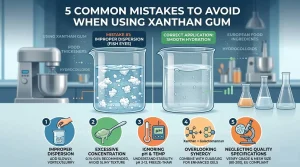
5 Common Mistakes to Avoid When Using Xanthan Gum
If you’ve ever experienced unexpected texture issues, inconsistent viscosity, or product instability when using xanthan gum, you’re not alone. This remarkable polysaccharide has become a cornerstone ingredient across European food manufacturing, yet it’s surprisingly easy to misuse. Understanding the nuances of xanthan gum application can mean the difference between a premium product and a costly reformulation. Whether you’re a food
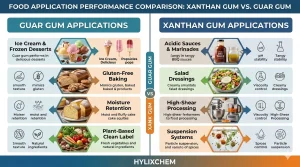
Xanthan Gum vs. Guar Gum: A Cost-Benefit Analysis
Xanthan gum vs guar gum cost is a common comparison for food manufacturers and ingredient procurement managers. While guar gum typically costs about $1.79/kg and xanthan gum about $1.79–$2.01/kg, xanthan gum often becomes more economical because it requires significantly lower usage rates in most food formulations. When your production line depends on the right hydrocolloid, choosing between xanthan gum and
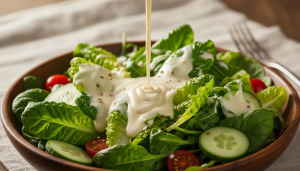
Formulation Deep Dive: Using Xanthan Gum in Salad Dressings
A truly great salad dressing is a balancing act. Consumers want it all: a rich, stable emulsion that doesn’t separate on the shelf, a satisfying mouthfeel, and the perfect “cling” that coats lettuce leaves without turning them soggy. For food formulators, achieving this trifecta is a significant challenge, especially when working with low-fat recipes or complex flavour profiles. The constant

The Ultimate Guide to Food Thickeners for European Formulators
When a premium yogurt manufacturer in Hamburg reformulated their product line last year, they faced an unexpected challenge: their traditional thickening system couldn’t deliver the clean-label promise European consumers demanded while maintaining the indulgent texture that drove sales. This scenario plays out daily across Europe’s €1.2 trillion food and beverage sector, where the choice of food thickeners can make or
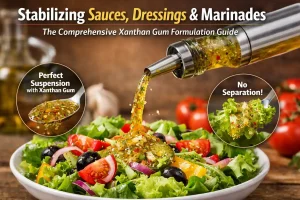
Stabilizing Sauces, Dressings & Marinades: The Comprehensive Xanthan Gum Formulation Guide
Introduction: The Battle Against Separation In commercial sauces and dressings, visual appeal and texture are the primary quality indicators. A vinaigrette that separates on the shelf signals “spoilage,” while a runny BBQ sauce is perceived as “cheap.” For food technologists, stabilizing these emulsions is complex. Formulations must withstand high acidity (pH < 3.5), high salt concentrations, pasteurization temperatures, and high

API 13A Xanthan Gum: The Ultimate Guide to Oil Drilling Fluids & Mud Rheology
Introduction: The Backbone of Modern Water-Based Muds (WBM) In the high-stakes world of oil and gas exploration, the performance of the drilling fluid (mud) can determine the success or failure of a well. As drilling operations move into deeper, hotter, and more challenging formations, the demand for high-performance drilling mud polymer additives has never been higher. While Bentonite was the